Precision Mixing for Dental Ceramics: How Alphie Mixer Enhances Titanium-Ceramic Blending in Dentistry
Introduction: Modern Dentistry Meets Advanced Materials
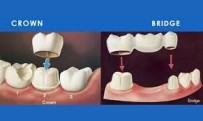
In restorative dentistry, dental crowns and bridges play a crucial role in restoring oral function and aesthetics. With growing demand for durable, lightweight, and biocompatible prosthetics, material science has pushed boundaries. A key innovation in this space is the development of titanium-ceramic composites — commonly created using a method known as Ceramed.
This process involves blending titanium, a metal known for its exceptional biocompatibility and strength, with ceramic materials such as alumina or zirconia, which offer hardness, wear resistance, and excellent aesthetics. The fusion of these materials results in dental restorations that are not only functionally superior but also long-lasting and well-tolerated by the human body.
However, producing a uniform and reliable powder blend of such dissimilar materials is no trivial task.
The Mixing Challenge in Dental Applications
Blending titanium and ceramic powders presents several challenges:
- Varying particle sizes and densities: Titanium is dense and metallic, while ceramics are lighter and more brittle.
- Poor inter-particle bonding: Due to differences in surface chemistry and energy.
- Agglomeration risks: Fine ceramic particles tend to clump, leading to non-uniform dispersion.
- Risk of local heating: Common in high-shear or blade-based mixers, which may alter powder characteristics.
Traditional mixing techniques like rotary tumblers, blade mixers, or ribbon blenders often fail to provide the gentle yet thorough motion required. Especially in medical-grade applications, batch uniformity and particle integrity are non-negotiable.
The Solution: Alphie Mixer – Model Alphie 3
To overcome these challenges, a leading dental materials lab adopted the Alphie 3, a 3D powder mixer specifically engineered for research and small-batch production environments.
Unlike conventional mixers, Alphie uses a three-dimensional inversion motion, often described as “drunken motion.” This gyroscopic movement ensures complete spatial inversion of the powder mix, resulting in a blend that is uniform across all particle types — regardless of size, shape, or density.
Why Alphie Mixer is Ideal for Dental Material Mixing
1. Homogeneous Blending Without Stress
The Alphie mixer doesn’t use blades or paddles. The absence of shear zones means no local heating or mechanical degradation of particles — essential when working with sensitive ceramic materials or reactive metals like titanium.
2. Prevention of Agglomeration and Segregation
Agglomeration is a common issue when dealing with fine ceramics. The Alphie’s gentle but dynamic tumbling action breaks up clumps naturally, ensuring every particle is evenly dispersed.
3. Adaptable Container System
Alphie’s String Crown system allows researchers to use a wide range of container shapes and sizes, from stainless steel drums to custom glass jars — perfect for experimenting with various formulations.
4. User Safety and Recipe Control
The built-in Recipe Mode with password protection ensures that critical mixing parameters — speed, time, and direction — are maintained precisely from batch to batch, minimizing human error.
Mixing Parameters Used in This Application
- Model Used: Alphie 3
- Speed: 50 RPM
- Mixing Duration: 1 Hour
- Container Fill Volume: 40%
- Container Type: Stainless steel with mirror-polished interior
Benefits Observed by the Client
- Highly uniform mixture of titanium and ceramic powders
- Improved sintering quality with reduced defects
- No particle degradation due to low-stress mixing
- Faster turnaround compared to manual or blade-based systems
- Repeatable results with Recipe Mode automation
About Alphie 3D Tumbling Mixers
The Alphie line of mixers from Hexagon Product Development Ltd. is designed to address the critical needs of fine powder mixing across industries — from pharmaceuticals and food to advanced materials and medical device manufacturing.
Key Features of Alphie Mixers:
- Capacity range from 1 litre to 1000+ litres
- Available in GMP-grade stainless steel or powder-coated mild steel
- Custom container fittings for sealed, contamination-free operation
- Option for liquid injection, media-assisted blending, and clean-in-place (CIP) design
- 21 CFR Part 11-compliant control panels for pharma-ready systems
Applications Beyond Dentistry
The success of Alphie in dental ceramic blending is mirrored across other precision powder blending applications such as:
- Biomedical implants
- Advanced ceramics
- Nanomaterial integrationHigh-purity metal powders for additive manufacturing
Whether the goal is to improve yield, reduce operator involvement, or increase mixing accuracy, Alphie offers a dependable solution backed by R&D expertise and industry-specific design.
Conclusion: Precision Meets Practicality
The Alphie 3 mixer has proven instrumental in solving a long-standing mixing challenge in the dental materials industry — enabling consistent, reproducible blending of titanium and ceramic powders without compromising their structural or chemical integrity.
By choosing Alphie, the client achieved not just technical success but also operational efficiency, reduced downtime, and reliable outcomes that met medical standards.
💬 Want to Discuss a Similar Mixing Challenge?
Whether you have a question, need a trial, or are looking for a quote — our team would love to hear from you.
Your input helps us grow and helps you move closer to the perfect mixing solution.