Improving Lab-Grown Diamond Quality Using Alphie Mixers: Precision Blending of Graphite Rings for HPHT Treatment
Overview
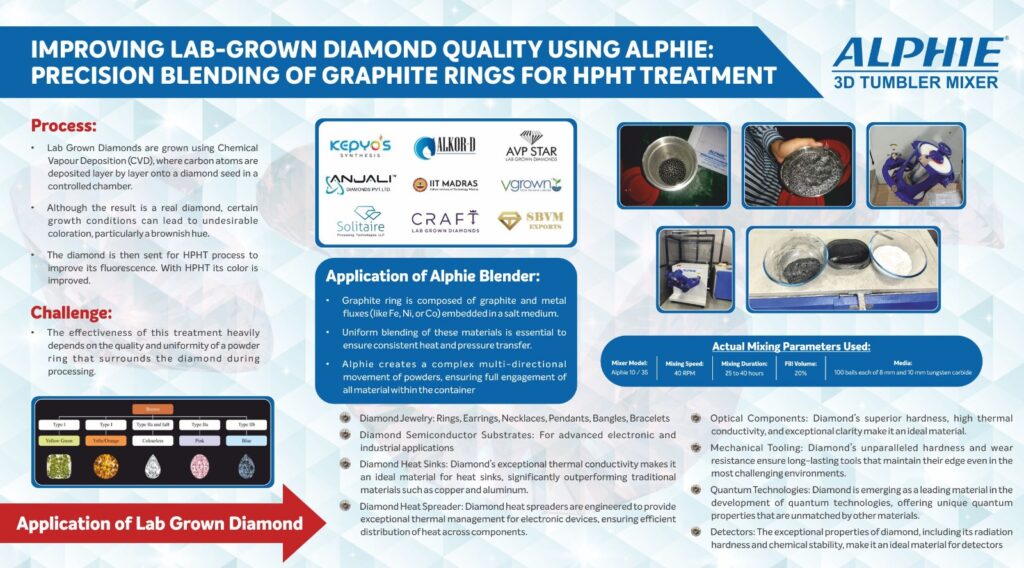
Lab-grown diamonds are rapidly gaining popularity due to their ethical sourcing, affordability, and quality. These diamonds are grown using Chemical Vapour Deposition (CVD), where carbon atoms are deposited layer by layer onto a diamond seed in a controlled chamber. Although the result is a real diamond, certain growth conditions can lead to undesirable coloration, particularly a brownish hue.
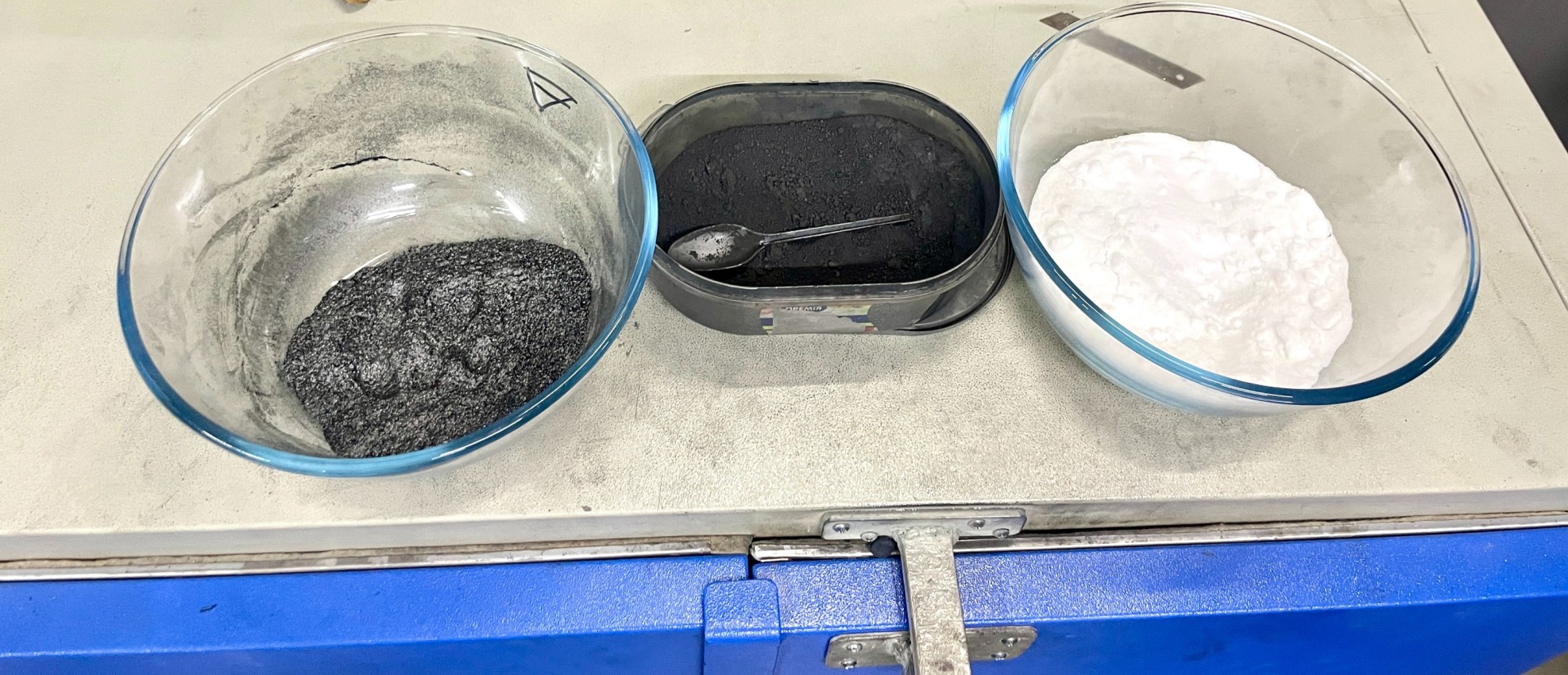
To address this issue, the diamond undergoes High Pressure High Temperature (HPHT) treatment. The effectiveness of this treatment heavily depends on the quality and uniformity of a powder ring that surrounds the diamond during processing. This ring is composed of graphite and metal fluxes (like Fe, Ni, or Co) embedded in a salt medium. Uniform blending of these materials is essential to ensure consistent heat and pressure transfer.
The Challenge Manual or poorly controlled blending methods often result in layer separation, agglomeration, or uneven distribution of graphite and flux powders. These inconsistencies can lead to localized overheating, reduced clarity improvement, or even diamond damage during HPHT.
The goal was to find a mixer capable of:
- Long, uninterrupted operation
- Zero segregation across powder layers
- Homogeneous blending with minimal energy input
- Compatibility with sealed, corrosion-resistant containers
Why Alphie 3D Mixer Was Selected
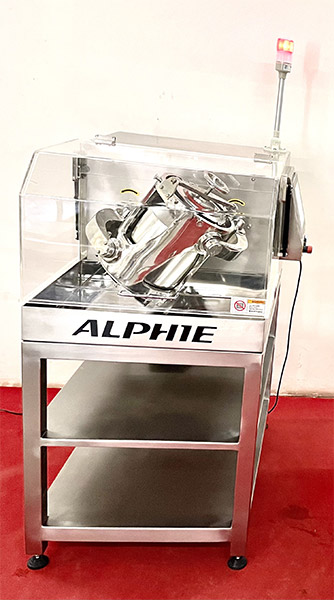
Alphie 3D Tumbling Mixers operate on the principle of spatial inversion and gyroscopic motion. Unlike conventional mixers that rotate in a single plane, Alphie creates a complex multi-directional movement of powders, ensuring full engagement of all material within the container.
Key Features for this Application:
- 3D Mixing Motion: Guarantees complete powder circulation and avoids layering.
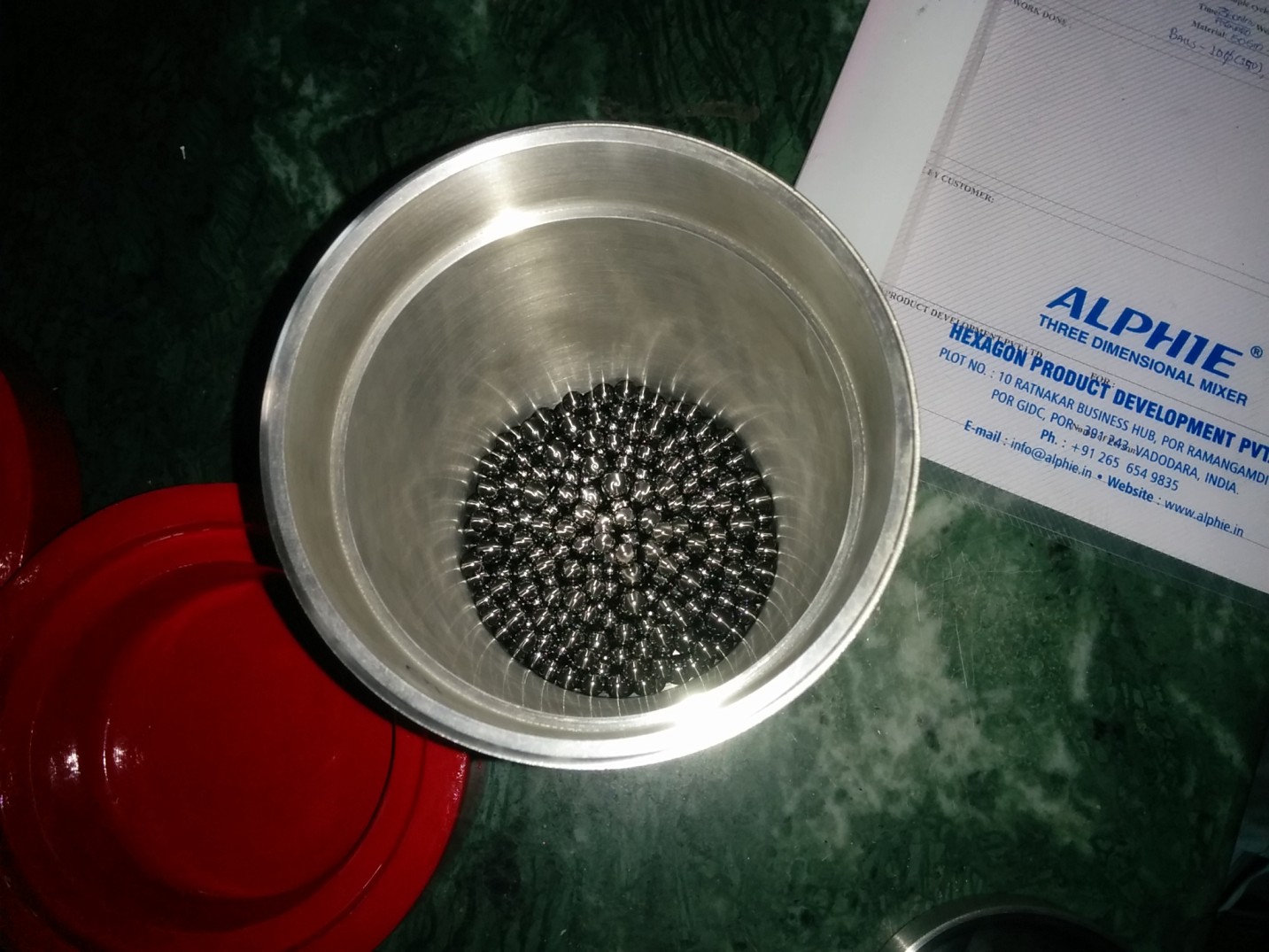
- Media Compatibility: Tungsten carbide balls (8 mm and 10 mm) used for effective de-agglomeration and better contact between fine particles.
- Custom Containers: Thick-walled stainless steel mixing vessels with brass lids and gasket sealing, allowing secure long-duration mixing.
- Crevice-Free Interior: Polished stainless steel finish prevents powder sticking and cross-contamination.
Actual Mixing Parameters Used:
- Mixer Model: Alphie 10
- Mixing Speed: 40 RPM
- Mixing Duration: 25 to 40 hours
- Fill Volume: 20%
- Media: 100 balls each of 8 mm and 10 mm tungsten carbide
Outcome and Benefits
The Alphie 10 model proved highly effective in delivering consistently blended graphite rings. Benefits observed included:
- Uniform HPHT results with fewer failed batches
- Lower rejection rates due to uneven powder mixing
- Increased production yield of diamonds with improved color and clarity
About Alphie Mixers
Alphie 3D mixers are used across industries where powder uniformity and process repeatability are critical. Their low-RPM, blade-less design preserves material integrity while achieving excellent blend quality.
Product Highlights:
- Models from lab-scale (1 litre) to production-scale (1000+ litres)
- Available in GMP-compliant stainless steel or powder-coated MS versions
- Flexible container shapes and material options
- Capable of sealed and contamination-free operation
Conclusion
With their advanced mixing mechanics and customizable design, Alphie Mixers are increasingly being adopted in the lab-grown diamond sector. This case study highlights how effective powder blending at the pre-HPHT stage can drastically influence final diamond quality.
Explore More
Want to see technical specs, request a trial, or consult on a similar application?
Scan the QR code in our book or visit [YourWebsite.com/lab-grown-diamonds] to learn more.
💬 Want to Discuss a Similar Mixing Challenge?
Whether you have a question, need a trial, or are looking for a quote — our team would love to hear from you.
Your input helps us grow and helps you move closer to the perfect mixing solution.